Getting the Best Auction Price for Your Silver: A Seller's Guide

Silver is having a strong year. According to exchange-rates.org, Spot prices peaked at £84 an ounce in January and, although they have eased since, they remain well above where they were this time last year.
A rising market makes this a sensible time to sell, but getting the best auction price for your silver depends on much more than the day's spot rate. Hallmarks, maker and condition all matter, as does whether you sell as a set or piece by piece.
At Cullens of Surrey, we are specialists in modern and antique silver. This guide covers each of the factors that determine what your pieces are worth, how to choose the right auction house, and when to time your sale.
Book a Free Silver Valuation With Our Auction Specialists
Is It Worth Selling Silver At Auction?
It is important to understand the difference between the 'scrap value' and 'collector value' (or auction value).
Scrap value is determined based on a silver product's weight, purity, and live spot prices. It offers faster, guaranteed payment, but the amount can be smaller than a sale at auction.
In contrast, collector or auction value is based on other factors such as rarity, condition, current demand, and bids. Prices are less predictable and may involve seller's commission fees, but they can significantly exceed the takings from scrap value.
Dealers buying scrap silver aim to buy low, often offering no more than the live spot price. Selling at auction gives you access to collectors and specialists willing to pay well above that scrap value for the right piece, making it the better option for anyone with silver that has rarity, provenance, or craftsmanship beyond its raw material worth.
What Sells Well at Auction
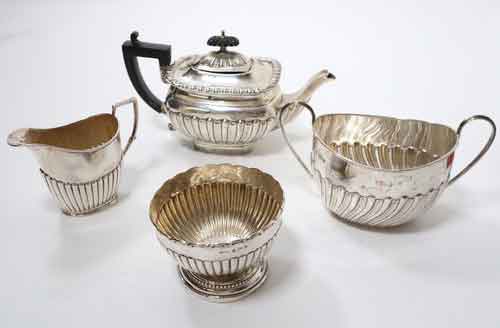
- Georgian silver: Hand-wrought pieces from this period are rare and command strong prices, thanks to their craftsmanship and early hallmarks.
- Complete sets: A full canteen of flatware or a matching tea service outperforms individual pieces sold separately.
- Named makers: Silver by renowned makers such as Paul Storr or Georg Jensen consistently draws strong collector interest and higher bids.
- Novelty items: The uniqueness of some items makes them very tempting for buyers.
What Does Not Sell Well at Auction
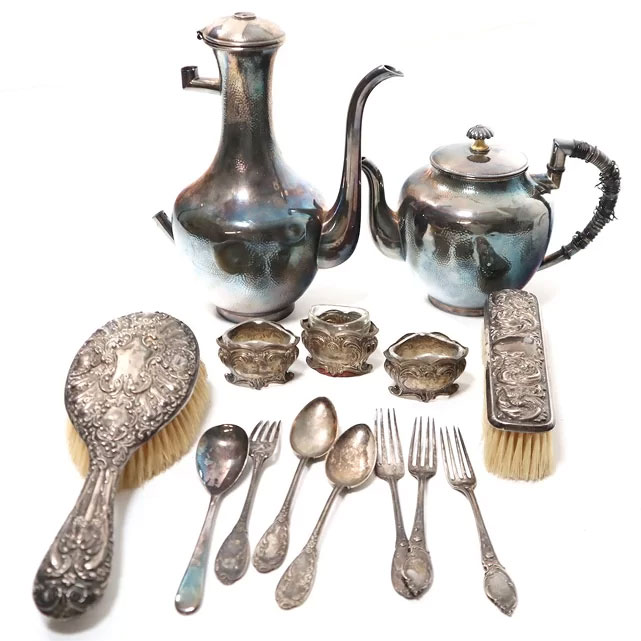
- Worn EPNS (electroplated nickel silver): As a plated rather than solid silver product, EPNS carries little value.
- Damaged Victorian tableware: Issues such as dents, missing lids and heavy monogram removal can harm a set's value.
- Heavily monogrammed items: Large or prominent engraving narrows the pool of interested buyers, who often prefer pieces without a previous owner's initials.
- Incomplete sets: A canteen missing several pieces, or a part-tea service, typically sells for considerably less than complete collections.
- Mass-produced twentieth-century silver plate: Prices are lower regardless of condition as they are widely available and low in collector interest.
This does not mean these items will not sell. They can, often to buyers looking for an affordable way into silver collecting. However, sellers should go in with realistic expectations, since these categories rarely command the higher prices that rarer or better-preserved pieces achieve.
Preparing Your Silver for Auction: Practical Steps
Ahead of auction, we recommend you take a series of key steps so you are ready to get the best auction price for your silver.
- Do not polish it: Let the expert assess it first, as over-polishing removes silver and destroys patina.
- Gather provenance: Any receipts, family letters, photographs with the items, original cases, or documentation adds to a product’s value.
- Keep pieces together: A matched set or service is worth more as a whole than split into individual lots.
- Take good photos for initial valuations: Ensure there is a good level of natural light, show close-ups of hallmarks, and show any damage honestly without trying to disguise it.
Understanding Auction Fees and What You Will Actually Receive
There are a series of factors that affect your take-home figure, which both favour and go against you.
These are the following:
- Seller’s commission: This varies between organisations, but if you sell an item at auction, you will likely have to pay between 10% and 20% of the hammer price to the auction house that managed the sale, plus VAT.
- No sale, no fee: If your item or collection does not sell, you will not have to pay a fee to the auctioneer.
- Other potential charges: Entry fees, photography, cataloguing and marketing might require fees.
See Our Full Breakdown of Seller Commission and Fees
Choosing the Right Auction House for Your Silverware
There are different types of auction houses and different types of auctions to consider before putting your pieces up for sale.
Specialist vs General Sales
Although general sales are good, a specialist has greater potential for bringing in more money. As an example, a fine Georgian salver antique is likely to do better at a dedicated silver sale than a general household goods one.
In Person vs Hybrid vs Online
Both have clear advantages over the other - the choice ultimately comes down to what is available and personal preference.
In-Person
Potential buyers can physically inspect products ahead of bidding
Live competitive atmosphere can drive up prices
An in-person auction has no reliance on an internet connection
Hybrid
An auctioneer runs the sale live, so remote bidders keep pace
Online bids appear instantly to everyone, keeping the auction transparent
Combines live atmosphere with online reach, though held less often
Online
Significantly increases the number of participants because people can participate from anywhere in the world
Removes the need for travel
Real-time tracking allows buyers to follow developments closely without being there
Local Knowledge
If you opt for a local specialist, such as a Surrey-based auction house, they know their buyer community and so offer a personal, accessible service. Tapping into what the local community is looking for can help to increase prices.
Sell Your Silverware At Auction Today!
At Cullens of Surrey, we provide a transparent auction service to help you sell your silver items! We offer in-person, online and hybrid auction options, free valuations, and complete end-to-end handling. Get in touch today to get a free product valuation and sell with us!
FAQs
-
My silver isn't hallmarked - can I still sell it?
Yes, you can still sell unmarked silver. Many older or foreign pieces carry no visible hallmark, but our specialists can still assess the metal, weight, and craftsmanship to establish its value. We use testing methods to confirm whether a piece is solid silver or plate before it goes to auction. Bring your items in, or send photos, and our team will give you an honest, expert valuation regardless of markings.
-
Should I clean my silver before bringing it in?
No, avoid cleaning your silver before valuation. Aggressive polishing can wear down hallmarks, engravings, and surface detail, all of which affect authenticity checks and final value. A light dusting is fine, but leave any deep cleaning to us.
-
How do I know if my silver is solid or just silver plate?
Solid silver carries a hallmark confirming its purity, while silver plate (often stamped EPNS) has a thin silver layer over a base metal. Weight also offers a clue, as solid silver typically feels heavier. If you are unsure, our specialists can identify the difference quickly using professional testing methods.
-
Can I sell a mixed lot of silver and silver plate together?
Yes, we regularly handle mixed lots containing both solid silver and silver plate. Our specialists assess each piece individually, so you do not need to separate them beforehand. This makes selling an inherited or mixed collection straightforward, as we group items appropriately once we know their true composition and value. Simply bring the full lot in, and we will guide you through the valuation and auction process.
-
How long does the process take?
Valuation is usually quick, often completed the same day you bring items in or send photographs. Once you consign your silver for auction, it typically appears in our next available sale, with new timed auctions running every five to six weeks. We will confirm exact dates and timelines once we have assessed your collection, so you always know what to expect before committing to sell.